Choosing a reliable handbag manufacturer in China is one of the most important decisions for fashion brands, private label businesses, online retailers, and global buyers.
However, a good supplier does more than produce bags. The right manufacturing partner can help you develop market-ready products, improve sampling speed, keep quality stable, control production risks, and support your long-term product plan.
For OEM and ODM buyers, the challenge is not only finding a factory with a good price. Instead, the real challenge is finding a handbag manufacturer that understands your design needs, product positioning, quality standards, delivery timeline, and target market.
Therefore, before choosing a supplier, buyers should check more than price. They should also review product development ability, sample quality, quality control, production capacity, material sourcing, and communication efficiency.
This guide explains what buyers should check before choosing a handbag manufacturer in China.
1. Check the Manufacturer’s Product Development Ability
For OEM and ODM handbag projects, product development ability is one of the first things to evaluate.
A reliable handbag manufacturer should be able to support your product development process from concept to sample. This includes understanding your reference styles, technical requirements, materials, hardware, structure, logo placement, packaging, and target price range.
For OEM projects, the supplier needs to accurately follow your design specifications and turn your tech pack or sample into a production-ready product.
For ODM projects, the supplier should provide design suggestions, material options, commercial style recommendations, and product development support based on your market positioning.
When evaluating a handbag manufacturer, buyers should ask:
- Can the supplier develop samples based on drawings, reference images, or tech packs?
- Can they recommend suitable materials and hardware?
- Can they adjust the structure, size, color, and details according to your requirements?
- Can they support seasonal product development?
- Can they balance design, quality, and target cost?
A manufacturer with strong development capability can help buyers reduce repeated revisions, shorten the sampling cycle, and improve the success rate of new product launches.
2. Evaluate OEM and ODM Experience
Not every handbag factory is suitable for OEM or ODM cooperation.
Some factories are only good at producing standard styles. Others may have production capacity but lack experience in customized development. For buyers who need private label handbags, customized collections, or seasonal product lines, OEM/ODM experience is essential.
A reliable OEM handbag manufacturer should be able to produce according to your exact specifications. This includes size, material, logo, lining, color, hardware, stitching, packaging, and quality requirements.
A reliable ODM handbag supplier should be able to provide product development support, including style selection, material matching, sample adjustment, and commercial product recommendations.
Before choosing a supplier, buyers should understand whether the manufacturer can support:
- OEM handbag production
- ODM handbag development
- Private label customization
- Logo customization
- Material and color customization
- Packaging customization
- Seasonal collection development
The more clearly a supplier understands OEM/ODM workflows, the smoother your project will be from sample development to bulk production.
3. Review Sample Quality Before Bulk Production
For handbag buyers, samples are not just product previews. They are an important way to evaluate the supplier’s professionalism.
A good sample should reflect the manufacturer’s understanding of your product requirements. Buyers should carefully check the sample’s material, structure, stitching, hardware, logo effect, lining, edge finishing, shape, weight, and overall workmanship.
- When reviewing handbag samples, pay attention to:
- Whether the size matches your specification
- Whether the material meets your expectation
- Whether the stitching is even and clean
- Whether the hardware feels durable
- Whether the logo position and effect are accurate
- Whether the bag shape is stable
- Whether the finishing details meet your quality standard
A reliable handbag manufacturer should also be able to explain sample differences clearly and provide professional suggestions for improvement.
If a supplier cannot control the quality of samples, it is difficult to expect stable quality in bulk production.
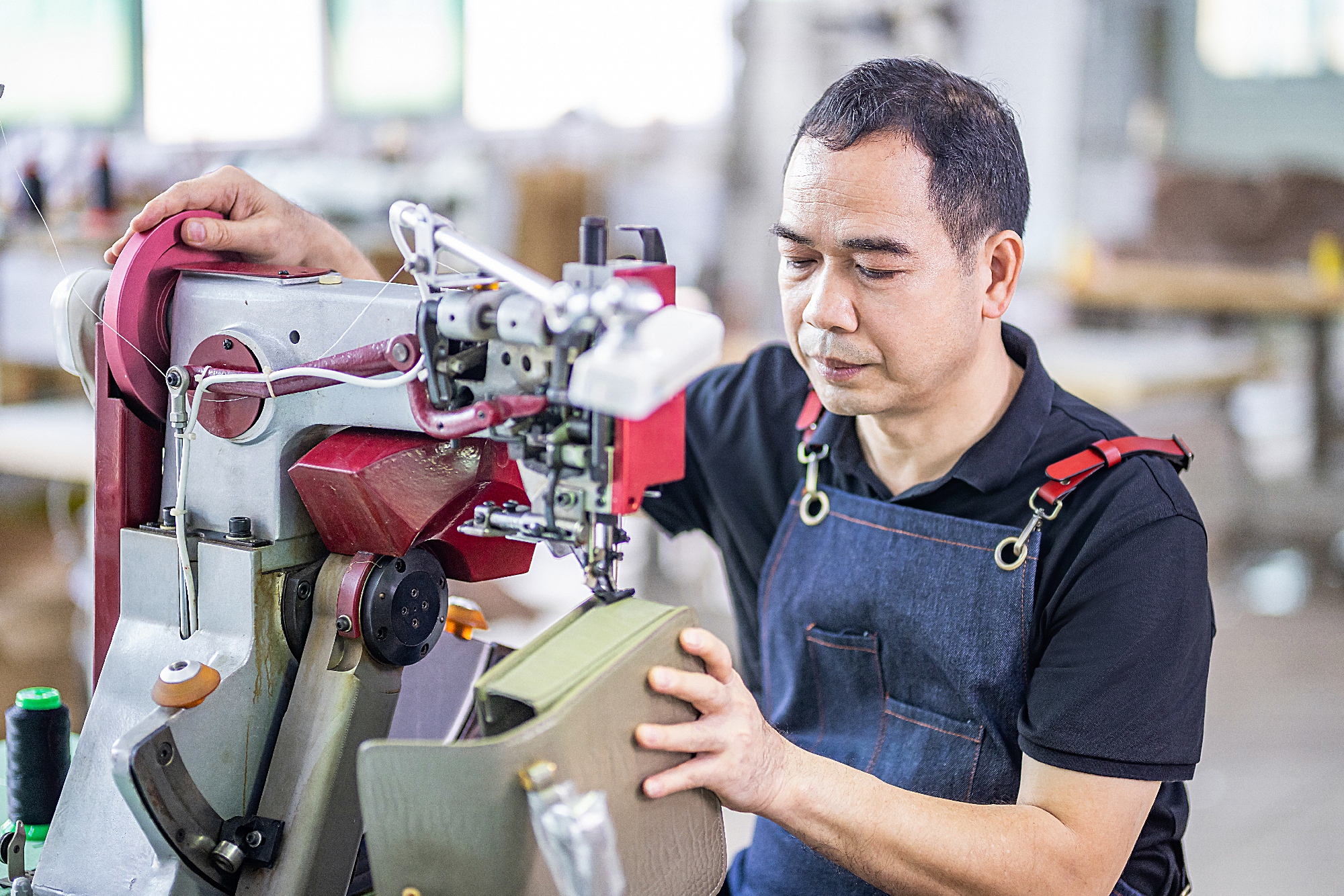
4. Understand the Factory’s Quality Control System
Stable quality is one of the biggest concerns for OEM and ODM handbag buyers.
A sample may look good, but bulk production is the real test. A reliable handbag manufacturer must have a clear quality control process before, during, and after production.
The quality control process should cover:
- Raw material inspection
- Hardware inspection
- Cutting inspection
- Stitching inspection
- Semi-finished product inspection
- Final product inspection
- Packaging inspection
- Random inspection before shipment
Buyers should ask the supplier how they control quality at each production stage. This is especially important for customized handbag orders because small differences in materials, structure, stitching, or logo application can affect the final product.
For OEM/ODM buyers, quality consistency is more important than a single perfect sample. The supplier should be able to maintain the same standard across the entire bulk order.
5. Check Production Capacity and Delivery Stability
Production capacity matters, but stability matters even more.
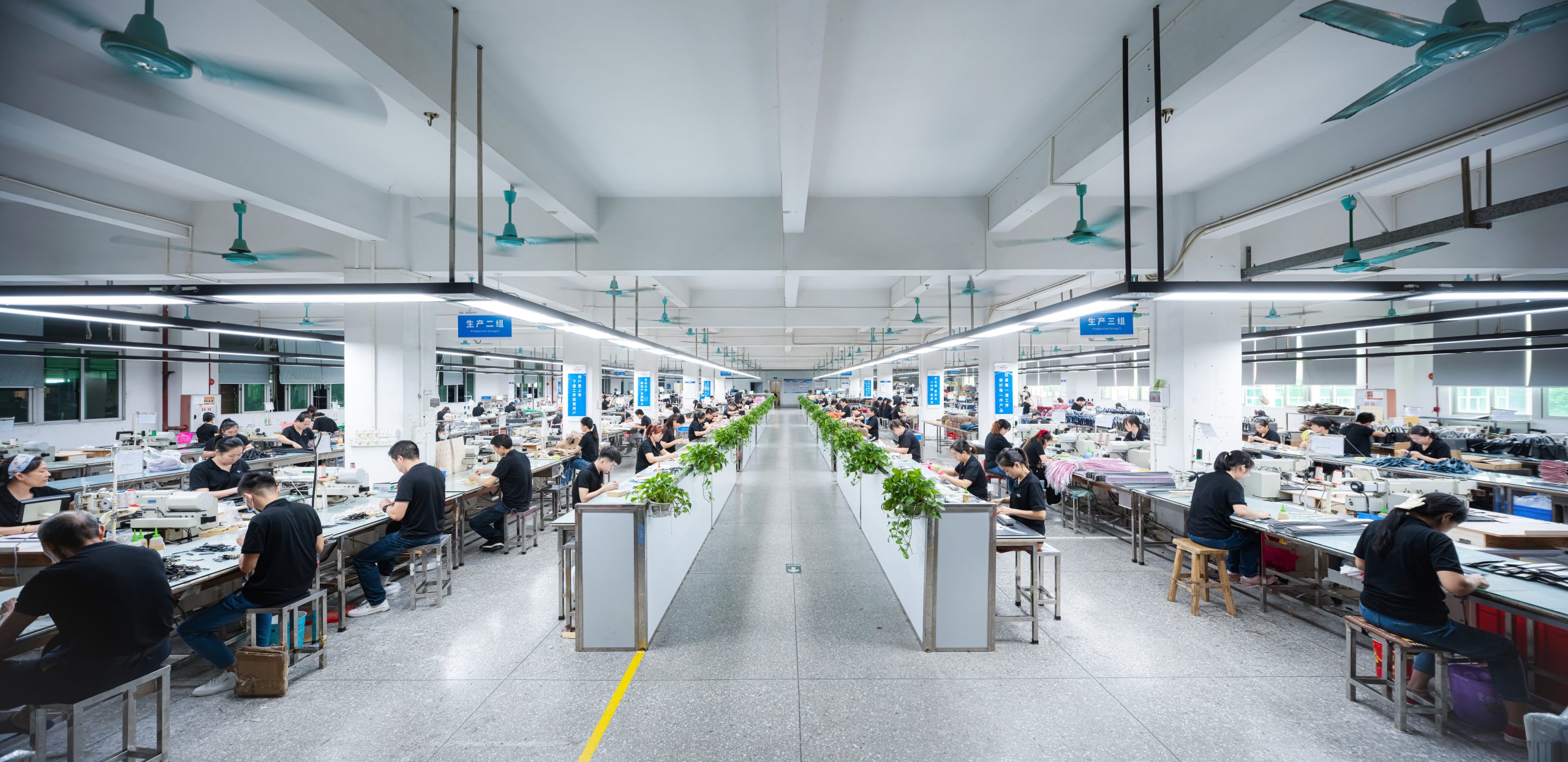
A reliable handbag manufacturer should have enough production resources to handle your order volume while maintaining quality and delivery timelines. Buyers should not only ask how many bags the factory can produce, but also how the factory manages production schedules, peak seasons, material lead times, and quality control during bulk production.
Important questions include:
- What is the normal production lead time?
- How long does sampling usually take?
- Can the factory handle repeat orders?
- How does the supplier manage urgent orders?
- How does the supplier control quality during high-volume production?
- Can the supplier provide regular production updates?
For brands and private label buyers, delivery delays can affect launch schedules, online campaigns, seasonal sales, and retail planning. That is why choosing a manufacturer with stable delivery management is critical.
6. Confirm Material and Hardware Sourcing Capability
Materials and hardware directly affect the appearance, durability, cost, and positioning of a handbag.
For OEM and ODM projects, the supplier should be able to provide suitable material and hardware options according to your design direction and target market.
This may include:
- PU leather
- Vegan leather
- Genuine leather
- Fabric materials
- Metal chains
- Zippers
- Buckles
- Magnetic closures
- Custom logo hardware
- Lining materials
A reliable handbag manufacturer should not simply ask buyers to decide everything alone. They should be able to recommend practical options based on product positioning, cost, durability, and production feasibility.
For example, a DTC fashion brand may care more about design uniqueness and visual impact, while a mass-market retailer may care more about durability, cost control, and stable repeat production.
Good material sourcing capability helps buyers develop products that are both attractive and commercially viable.
7. Make Sure the Supplier Understands Your Target Market
OEM and ODM buyers often serve different markets, price ranges, and customer groups.
A handbag that works for one market may not work for another. For example, buyers targeting young fashion consumers may prefer trend-driven silhouettes and seasonal colors, while buyers targeting professional women may care more about functionality, structure, and everyday use.
Before starting an OEM or ODM project, buyers should also consider handbag trends to make sure the product direction matches real market demand. A reliable handbag manufacturer should understand that product development is not only about production. It is also about market fit.
Before starting a project, buyers should communicate:
- Target customer group
- Retail price range
- Sales channel
- Product style direction
- Material preference
- Quality expectation
- Packaging requirement
- Launch timeline
The more clearly the supplier understands your market, the better they can support product development and production decisions.

8. Check Communication Efficiency
Good communication can save time, cost, and risk.
For overseas buyers, communication efficiency is especially important. Misunderstandings in product details, materials, sizes, colors, logo requirements, or packaging can lead to sample delays and production mistakes.
A reliable handbag manufacturer should provide clear and timely communication during the entire cooperation process.
Buyers should evaluate whether the supplier can:
- Understand product requirements accurately
- Confirm details in writing
- Provide sample feedback clearly
- Share production progress
- Respond to problems quickly
- Offer practical solutions when issues occur
Professional communication is not only about fast replies. It is about whether the supplier can understand your business needs and turn them into accurate production execution.
9. Compare Price, But Do Not Choose Only by Price
Price is important, but the lowest price is not always the best choice.
For OEM and ODM handbag projects, extremely low prices may lead to hidden risks, such as unstable materials, weak hardware, poor finishing, inaccurate logo effects, delayed delivery, or inconsistent bulk quality.
Buyers should evaluate price together with:
- Material quality
- Workmanship
- Sample accuracy
- Production capacity
- Quality control
- Communication efficiency
- Delivery stability
- After-sales support
A reliable handbag manufacturer should provide a reasonable quotation based on product structure, material, order quantity, customization requirements, packaging, and production complexity.
The goal is not to find the cheapest supplier. The goal is to find a supplier that can help you produce stable, market-ready handbags at a reasonable cost.
10. Look for Long-Term Manufacturing Support
For brands and private label buyers, choosing a handbag manufacturer is not just about one order.
A strong manufacturing partner can support multiple product seasons, repeat orders, new collection development, material updates, and product optimization.
Long-term cooperation can help buyers:
- Improve development efficiency
- Reduce communication costs
- Maintain stable product quality
- Build consistent product standards
- Shorten future sampling cycles
- Improve supply chain reliability
For OEM and ODM handbag buyers, the best supplier is not only a factory that can make one product. It is a partner that can support continuous product development and stable production over time.
Why Choose AOPIYA as Your OEM/ODM Handbag Manufacturing Partner
AOPIYA supports global buyers with professional handbag manufacturing and product development services.
We work with customers who need OEM handbag production, ODM handbag development, private label customization, and customized handbag solutions for different markets.
Our team supports buyers throughout the process, from product concept and material selection to sample development, bulk production, quality control, and delivery coordination.
AOPIYA can support:
- OEM handbag manufacturing
- ODM handbag development
- Private label handbag production
- Custom logo handbags
- Material and color customization
- Seasonal handbag collection development
- Bulk order production
- Quality control and delivery management
For buyers looking for a reliable handbag manufacturer in China, AOPIYA provides a practical and professional supply chain solution focused on product development, quality stability, and long-term manufacturing cooperation.
FAQ
1. What is an OEM handbag manufacturer?
An OEM handbag manufacturer produces handbags according to the buyer’s own design, specification, sample, or tech pack. The buyer usually provides the product concept, and the factory is responsible for development, sampling, production, and quality control.
2. What is an ODM handbag supplier?
An ODM handbag supplier provides product development support based on the buyer’s market needs. The supplier may offer design suggestions, existing product structures, material options, and customized adjustments for the buyer’s collection.
3. How do I choose a reliable handbag manufacturer in China?
Buyers should evaluate the manufacturer’s product development capability, OEM/ODM experience, sample quality, quality control system, production capacity, material sourcing ability, communication efficiency, and delivery stability.
4. Can I customize handbag materials, colors, logos, and packaging?
Yes. A professional OEM/ODM handbag manufacturer can usually support material customization, color customization, logo application, hardware selection, lining adjustment, and packaging customization based on the buyer’s requirements.
5. How long does handbag sampling usually take?
Sampling time depends on the product structure, material availability, customization complexity, and revision requirements. Simple designs may take less time, while highly customized handbags may require a longer development cycle.
6. What should I prepare before contacting a handbag manufacturer?
It is helpful to prepare reference images, design drawings, tech packs, target materials, preferred colors, logo requirements, estimated order quantity, target price range, packaging needs, and expected delivery timeline.
7. Why should buyers not choose a handbag supplier only by price?
The lowest price may lead to risks in material quality, workmanship, hardware durability, delivery stability, and bulk order consistency. Buyers should evaluate overall value, not just unit cost.
8. Does AOPIYA support private label handbag production?
Yes. AOPIYA supports private label handbag production, including logo customization, product customization, material selection, packaging requirements, and bulk production for overseas buyers.